
John Lennon claimed to have written “about 70 per cent” of the words for ‘Eleanor Rigby’, although in separate accounts Paul McCartney and Pete Shotton both remember otherwise. Shotton described Lennon’s contribution as “virtually nil”.
Ah, the first verse was his and the rest are basically mine. But the way he did it… Well, he knew he had a song. But by that time he didn’t want to ask for my help, and we were sitting around with Mal Evans and Neil Aspinall, so he said to us, ‘Hey, you guys, finish up the lyrics.’Now I was there with Mal, a telephone installer who was our road manager, and Neil, who was a student accountant, and I was insulted and hurt that Paul had just thrown it out in the aid. He actually meant he wanted me to do it, and of course there isn’t a line of theirs in the song because I finally went off to a room with Paul and we finished the song. But that’s how… that’s the kind of insensitivity he would have, which upset me in later years. That’s the kind of person he is. ‘Here, finish these lyrics up,’ like to anybody who was around.
Oh, he had the whole start: ‘Eleanor Rigby picks up the rice in the church where a wedding has been.’ And he had the story and knew where it was going. So we had to work out, ‘Well, is there anybody else in this story?’ We came up with Father McCartney for a bit, but Paul said his dad would be upset, so we made it into McKenzie, even though McCartney sounded better. And then we went on to new characters… It’s hard to describe, even with the clarity of memory, the moment the apple falls. The thing will start moving along at a speed of its own, then you wake up at the end of it and have this whole thing on paper, you know? Who said what to whom as we were writing, I don’t know.
I do know that George Harrison was there when we came up with ‘Ah, look at all the lonely people.’ He and George were settling on that as I left the studio to go to the toilet, and I heard the lyric and turned around and said, ‘That’s it!’
All We Are Saying, David Sheff
Paul McCartney recorded a demo of ‘Eleanor Rigby’ at the Ashers’ house. He later claimed that Marianne Faithfull expressed an interest in recording the song after she and Mick Jagger were played the demo.
I remember thinking to myself, What am I going to do when I’m thirty? Thirty was the big age. Will I still be in a group? I remember being round at John Dunbar’s house, having a very clear vision of myself in a herringbone jacket with leather elbow patches and a pipe, thinking ‘Eleanor Rigby’, this could be a way I could go, I could become a more serious writer, not so much a pop writer.
Many Years From Now, Barry Miles
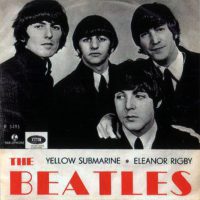
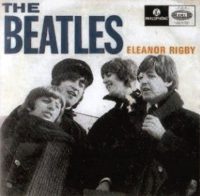

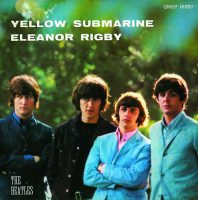
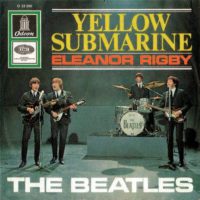
In the studio
Recording began on 28 April 1966. With a score by George Martin, and inspired by the music written by Bernard Herrmann for the Truffaut film Farenheit 451, no Beatles played on the record. Instead a closely-miked string octet was recorded in 14 takes, after which Paul overdubbed his lead vocals.
The violins backing was Paul’s idea. Jane Asher had turned him on to Vivaldi, and it was very good, the violins, straight out of Vivaldi. I can’t take any credit for that, a-tall.
All We Are Saying, David Sheff
On 29 April McCartney added more vocals, and he, Lennon and Harrison provided harmonies. The song was then considered complete until 6 June, when Paul added one more vocal part.
George Martin had introduced me to the string quartet idea through ‘Yesterday’. I’d resisted the idea at first, but when it worked I fell in love with it. So I ended up writing ‘Eleanor Rigby’ with a string component in mind. When I took the song to George, I said that, for accompaniment, I wanted a series of E minor chord stabs. In fact, the whole song is really only two chords: C major and E minor. In George’s version of things, he conflates my idea of the stabs and his own inspiration by Bernard Hermann, who had written the music for the movie Psycho. George wanted to bring some of that drama into the arrangement. And, of course, there’s some kind of madcap connection between Eleanor Rigby, an elderly woman left high and dry, and the mummified mother in Psycho.
The Lyrics: 1956 To The Present
George Martin’s score was released in 1996 unadorned by vocals, on Anthology 2. The song also appeared in remix form on the Love album.
Chart success
The double a-side single ‘Eleanor Rigby’/‘Yellow Submarine’ was released in the UK on 5 August 1966, the same day as Revolver.
The single entered the charts on 10 August at number two. The following week it reached the top, where it remained for four weeks.
In America it fared less well. Released on 8 August 1966, it charted at number 11 and spent six weeks in the top 40.
The US single peaked at number two on the Billboard Hot 100 and Cashbox charts; this has been attributed to the downbeat subject matter, and also the fallout from John Lennon’s “more popular than Jesus” comments.
‘Eleanor Rigby’ was nominated for three Grammy awards in 1966, and won the Best Contemporary Rock and Roll Vocal Performance, Male.
Paul was kind of upset about john taking credit for a large part of the lyrics of eleanor rigby. Like you said, paul said that wasnt true in many occasions.
This is what McCartney said to Hunter Davies in 1981 just a few months after the playboy interview was published and John had died. “ I saw somewhere that he says (John) he helped on Eleanor Rigby. Yeah. About half a line. He also forgot completely that I wrote the tune for In My Life. That was my tune. But perhaps he just made a mistake on that.”.
The timing for Paul’s response couldn’t have been better.
So?
He DID write the tune for “In my life”.
My reply was about Paul’s insensitivity with a remark like “Yeah. About half a line” (concerning Eleanor Rigby) made to Hunter Davies, just a few months after Lennon’s death.
Why didn’t McCartney say this prior to Lennon’s death?
John’s opinions about Eleanor Rigby and In My Life were well known prior to December 8, 1980.
Paul said that comment to Hunter Davies in a private conversation (which to me, makes it more convincing than Lennon’s comments on his interviews with the press (in my opinion, John used to rewrite the history all the time. He seems to let his feelings and insecurities affected his objectivity). Hunter Davies published the entire conversation with Paul, on his 1985 version of the book The Beatles. You should read all the conversation to understand Paul’s point of view. He was talking to a friend, a journalist but off the record, later Davies asked Paul permission to publish the conversation.
Joe you said “John’s opinions about Eleanor Rigby and In My Life were well known prior to December 8, 1980.”
Paul said in 1972 (Hit Parader) and in 1973 (The Rolling Stone), that In my Life was his tune completely and the words were Lennon´s. McCartney always spoke about Eleanor Rigby as if the lyrics were written mostly by him (that’s an indirect way to answer John without getting to a fight with him, something McCartney was surely avoiding after their public battle in 1971).
The fact, is that in the seventies, Paul was very busy promoting and selling millions of records, defending Wings of the critics and conquering the world again. He only saw the real need of set the record straight about his contributions to The Beatles songs’ when Lennon died. Why? Because immediately after John was shot, everybody began to write books taking Lennon`s version of the Beatles history as the only one, “the truth” (even if his comments sometimes don’t match or left many doubts and questions) and declaring Lennon as the only and true genius of the band. So understandably, Paul finally gave his version and defended his contributions to the band. It doesn’t matter if some rabid Lennon’s fans call him a liar or an opportunist, McCartney’s decision to reveal his version (IMHO, it’s not flawless but more consistent, credible and detailed than Lennon’s) put him again in the same league as Lennon in The Beatles history and public perception. And I think is fair, because Paul was as important as John for the success of the band.
Couldn’t agree more
Thank you for setting the record strait. I think John along with YO turned revising history into an art form, and yes I do love John Lennon music but the man did have his issues with the truth and loved to promote himself as the only genius, even implying that fishermen couldn’t be geniuses.
To quote Lennon Remembers by Jann Wenner, “I’d like to be a fisherman but I can’t because I’m a genius!”.
IMHO, Paul was perhaps most important to the Beatles legacy due to the amount of either British and/or US hits penned by McCartney, alone or with little influence by the other members.
Perfect. Thank you. I’m glad things seem to be equalizing a bit again finally. But that rag Rolling Stone? They don’t have Paul listed as one of the greatest artists of all time.But guess who is listed? That POS mag continues it’s hard on for Lennon over Macca to this day.
I’m so sick of it. I haven’t picked one up to read it in years .
couldn’t agree more, John was sporadically brilliant but Paul was the true genius in the Beatles
Lennon told Crawdaddy in 1972 and Playboy in 1980 his memory of who wrote what on which Beatles song. McCartney disagreed with Lennon on two songs out of 50 songs. How is that Lennon revising history? McCartney has insinuated he wrote the lyrics to Eleanor Rigby. Half a line from Lennon… a line from Ringo … 2 lines from Pete Shotton… the opening from Harrison… McCartney didn’t mention those contributions to Hunter Davis did he?
john lennon was revising history in 1980 interview.
And Paul said that ER lyrics are mostly his. It’s still true.
I dont think lennon ever really cared that much about credit ,he even gave credit to paul fo even his own solo songs (give peace a chance , gimme som truth ) and said yellow submarine was pauls 100 percent which wasnt true as we can hear demos!
I mean Lennon has even gave paul credit to lennons best songs such as in my life and norwegian wood with middle 8,but paul never gave johm credit where it was due to paul best songs !
I mean paul says lennon wrote two lines , harrison came with hook ahh lonely people , and other people were also involved
I always think that In My Life musically has McCartney all over it- it’s so Paul melodically.
I believe Paul. He has no reason to lie, being neither insecure or lacking in legacy and achievement.
But musically it sounds very Paul, an utterly beautiful tune. With astounding lyrics from John.
If he did wrote In my life music , lets be honest who in the world will give that melody to anyone ??
And Btw when a muscian is writing a song he has structure already written , i hardly think lennon just went to paul with set of lyrics and mcartney wrote The music ! mcartney only came with middle 8 thats it !! and it makes sense too
Just imagine If john was making the song he mustve had chord already written while playing on guitar and writing lyrcis !
Lennon Wrote Beatles History ? Paul has been accused for decades of rewriting history by beatles historians !
I mean John lennon never cared for credit he even gave paul credit on his solo songs too ( gimme some truth , give peace a chancee etc) And even songs such as yellow submarine (which he kind of wrote )
John lennon even let paul have his go in his best songs such as Day in the life ,day tripper etc
I wonder if paul let johns have his to in his best songs ?
Paul even said that john lennon launched missiles at him by singing how do you sleep not telling how he wrote too many people in recent interview !!!
https://www.npr.org/2018/08/11/637468053/a-songwriting-mystery-solved-math-proves-john-lennon-wrote-in-my-life
All John
https://www.npr.org/2018/08/11/637468053/a-songwriting-mystery-solved-math-proves-john-lennon-wrote-in-my-life
About 70 percent of the lyrics were written with John present in the room, meaning he DID *kind of* write 70 percent of it. I wonder if most people, Paul included, take John’s statement too literally, or, rather, mathematically.
Well, I guess if I say my lamp was in the room 100 percent of the time I wrote my English essay, my lamp wrote 100 percent of my essay? No offence meant, of course!
If it was illuminating, yes!
LOL! Nice comeback.
without the lamp, most probable you wrote nothing hehe…. so with the help of the lamp you did 100%…. lol
Everett’s take:
A string octet were recorded – mikes right at the strings – two per track, requiring a reduction to one track.
Two vocal tracks were recorded: Paul’s lead vocal and John and George’s backing parts. ADT sent the lead vocal signal to the left for refrains, but to the left in the last refrain.
A fourth track was used to add a countermelody vocal from Paul to the last refrain, sung through a Leslie speaker and with ADT.
According to Anthology, Paul was the only Beatle on this song.
Reporter: Do you think you’ll ever record solo?
…
George: We already have … Eleanor Rigby was just Paul.
John: We just sat around drinking tea.
The harmony vocals of Paul,John,and George were recorded the day after Paul’s original vocals.
There are no other Beatles on this record. Paul is singing double-tracked or second vocal.
That’s not true. Hear the *.ogg files, where the song is splitted in 4 channels. The first contains backing vocals from paul (high) john (mid) and george (low) singins “all the lonely people” line.
Where did you find the .ogg files (whatever format that is)?
Take a look at this forum thread.
Hi, Does anyone know if a score for the string parts exists that I could purchase or find through a library? I would like to analyze it.
Thanks!
A recording of the strings you could find on anthology 2, but I don’t know about the score.
Oh boy, here comes another dispute! Even though I eventually caved and came to believe paulsbass’s centention that Paul alone sang that wordless ADITL bit, it’s not gonna happen this time. I’m positive I hear George and John’s harmonies in the left stereo channel, “Anthology” remarks notwithstanding. And anyways, being requried to do nothing other than to sing “Ah, look at all the lonely people” four times total would certainly leave John with plenty of time to do nothing but sit around and drink tea.
The 5th and 6th iterations of the “Ahhh…” lyric: Now THOSE were indeed sung by Paul all alone.
No dispute this time, you’re totally right!
I completely forgot about that intro part (same in the middle). I don’t know if the middle one is George or Paul, but the deep one is definitely John.
Sorry!
I should listen to the song before talking about it…
The basic melody is great. The strings are great and Paul’s voice is great. One of the best Beatle songs. Paul is brilliant!
John was very jealous of Paul, wasn’t he? Always had to throw in a little shot, a little putdown.
Might’ve been nice if he wasn’t so jealous…and such a hypocrite; singing about “all you need is love” and “imagine no possessions” while walking out on his wife and baby and riding around in his golden Rolls Royce.
I don’t think that John Lennon invented jealousy or divorce.
If you read about his family upbringing you may discover that he was left behind by his parents.
As for riding around in a “golden rolls royce” what did you expect after selling hundreds of millions of records?
No, John didn’t invent jealousy or divorce. Nor did he invent infidelit or child abandonment. But he did engage in these activities, while at the same time singing and preaching the opposite.
I don’t expect to change your mind about Lennon. And yes, I’m a great fan of his and the Beatles music. But truth is truth (as Lennon would probably agree). If you choose not to accept that truth, more power to you.
I’d expect him not to sing about the virtues of having no possessions.
Yep, Paul wasn’t jealous of John at all, he hasn’t tried to take any credit for any songs In His Life…
I see no evidence of Paul’s jealousy of John. I have NEVER read ANYTHING about Paul putting down a Lennon song. At most, there was some disagreement as to his contribution to some Lennon songs. Whereas Lennon critisized McCartney’s songs constantly.
But just believe what makes you feel good.
Sorry Joe, I just have a quick response if that’s okay. John is not putting down Eleanor Rigby, he’s saying that he helped or wrote most of the lyrics. He put down many McCartney songs, but he put down even more of his own, so I don’t think John really viewed songs as his songs versus Paul’s songs, they were just Beatle songs because they all collaborated on most of the material. John is trying to take credit for this song, but Paul did the exact same thing on some of John’s songs, he was just more “politically correct” about it whereas John was blunt and said what he felt. I’m sure if John were to be interviewed now, he’d feel differently and not put down a lot of the Beatles work, but unfortunately that’s not possible.
No problem. Thanks for staying on topic.
What does Paul drive?
Imagine says to do what you can to fix the world, not to say give everything you own away and live on the street. There was mutual respect for each other, but Jealousy was NonExistant
OK, I think this is the sort of conversation that could run and run. Funny how so many threads seems to end up John v Paul. Can I suggest you take this to the forum instead, and keep this page for discussions about Eleanor Rigby? I won’t publish any more comments on this matter on this page.
That Paul and John were both eager to take credit for this song reveals how timeless it truly is. The violins give it a surreal feeling, which reflects how the Beatles music progressed both lyrically and in depth, scope, and texture starting in ’66.
Eleanor Rigby is one of the saddest song I ever heard. The Lyrics are great, but what impress me most in this tune is George Martin’s contribution.. I think the arrangements are superb!
Exactly my thoughts too. George Martin, if there was a way to bring this back to 16th century Europe, would have been knighted on the spot for his arrangement. It’s just brilliant and colorful too.
Indeed, this track is quite good. Can we safely assume that Lennon’s contribution was rather prodigious, based on the inclusive banality of McCartney’s post-1970 lyrics?
…and can we safely assume McCartney’s strong influence on Lennon songs, given the over-indulgence, and the self-centeredness and self-importance of Lennon’s post 1968 lyrics?
Frankly, they were at their best when they were together.
No, because this was not post-1970. This was 1966, when Paul came up with the lyrics for tunes like “For No One,” “Got to Get You into My Life”, and “Here, there and Everywhere” (all of which received some rare praise from Lennon, btw). Critics of Paul’s lyrics tend to focus on specific songs rather than looking at the overall body of work. If the same standard is applied to John’s work, we get the same results. “Glass Onion” does not have the most brilliant lyrics. “I Want You” lyrics are not exactly bursting with creativity. “Come Together,” “I Am the Walrus,” and SFF lyrics are nonsense. And that’s ok. We LOVE those songs. So we don’t criticize them. Why do so many ppl criticize Paul’s lyrics? I don’t get it. But none of that should lead us to assume that John’s contribution to ER was prodigious.
John himself said he writes lyrics about his life; bc that’s what he knows. Further, he said that Paul writes songs about made up people like Maxwells and Ritas and Desmonds and Paperback Writers etc etc. With a few exceptions like Bungalow Bill or When I’m 64, John’s statement tracks, particularly from 66 on. So if we’re going to assume something about the authorship of Eleanor Rigby, by John’s own words, we MUST assume that lyrics about Father Mackenzie and Eleanor Rigby are Paul’s.
No, I don’t think we can. “She’s leaving home” has something in common with Eleanor Rigby, though some verses in the latter one do sound very Lennonsy, “Wiping his hands as he walks from the grave”, “Writing the words of a sermon that no one will hear”
John wrote all the “we gave her most of our lives” parts in SLH.
While you’re at it John also wrote “take these broken wings and learn to fly…take these sunken eyes and learn to see” for Blackbird since they sound too good for Paul. What hogwash! Btw, the above lines are as good a poetry ever written in English language. And there are plenty of great post-Beatles Macca songs lyrics.
Hello. This is true but the pessimist lines generally belonged to John.
He was a fan of Edgar Allan Poe’s and his Annabel Lee.
Stuffs like that
Pessimist one? Nothing more pessimist than For No One. Who wrote it? I think it’s the most pessimist song of the bealtes. Yes in yer blues john said he wants to die, but being alive but is not in the eyes of the one that once loves you (and you still love her). kinda worse.
Can anyone please explain to me what John’s quote about jesus means
Typical John.Don’t try hard to understand his words.
I think that came from his very uncomfortable press conference after the whole “more popular than Christ” kerfuffle, and he was just using Eleanor Rigby as an example of a Beatles song.
J Neo, I agree. Eleanor Rigby had been released just days before Lennon mad that comment, so it was fresh on his mind.
I think what Charles is simply saying is that John Lennon *probably* helped shape the song — lyrically. I agree. Paul himself has stated that when writing a song he’d use nonsense words as filler to be replaced later. Given the excellence of Penny Lane’s lyrics, it’s very possible Lennon helped with these replacements. And no one can argue that the quality PM’s lyrics declined after 1970. Given that, he is undoubtedly still the greatest tunesmith of all time.
Not sure that Penny Lane is an example of quality lyrics from PM. As evidence: “It’s a clean machine” That was always a howler for us when we were in school…
What are “quality lyrics?” “I am the egg man, I am the walrus, coo coo ca choo”?
I thought the fire engine and how clean it was were references to his shank. Kind of how “Drive my Car” was not literally about being a chauffeur.
If you are quoting lyrics whether they are quality or not, better make sure you got them right.
On a lighter note… My grandmother (who was 48 when this record came out, hated The Beatles. She was a Big Band-era girl. This was the only Beatles record she ever bought. She was hip in some ways, though. She actually bought “Somebody To Love” by Jefferson Airplane. Many years later, she bought John’s “Nobody Told Me”, & she was in her 60’s by then!!
A truly beautiful composition. One my favorites from Paul.
Yes, An absolute “masterpiece” of music.
It’s good Paul insisted & ended up using the ‘McKenzie’ instead of ‘McCartney.’ For it would be way too self-serving for him to sing his own surname in the lyrics.
This song is truly a classic masterpiece. Aside from the lyrics, the strings arrangement adds to the mysterious characteristic this song posesses. Thumbs up also to George Martin!
As I read the article, I felt that John’s near insistence of using McCartney as a better name seemed like a subtle attempt to try to sabotage the song. Add that to his entire comment to Sheff (even in 1980 when they had supposedly mended some of the fences) about the song and you can see the rift was forming even by 1966.
Interesting: Paul did say that he contributed significantly to “In My Life” in Hit Parader (1972), and he supposedly agreed with the remainder of John’s comments about who wrote what concerning Lennon-McCartney songs. With that being said, in the Miles book (1997), Paul takes a more possessive stance. He claims much more credit for his contributions to “John” songs (from “There’s A Place,” “It Won’t Be Long” and “This Boy” to “Lucy In The Sky With Diamonds” among others), while maintaining the larger credit allotment that John had given him for the “Paul” songs in 1972.
By far the most significant of those four is LSD, and it happens we have good evidence in that case. John himself credited Paul with ‘newspaper taxis appear on the shore’ which is consistent with Paul’s account that he contributed this part and the ‘cellophane flowers’ (John was reacting specifically to a comment on ‘newspaper taxis’ and wasn’t being asked about the rest.) You can hear Paul coaching John how to sing ‘cellophane flowers’ on the Abbey Rd tapes. And if you look at John’s rough lyric sketch (i.e. in Hunter Davies book) you’ll see that these two lyric sections are added in Paul’s hand. This is good evidence. And don’t forget that that iconic keyboard figure, which instantly says ‘LSD’, is also by Paul.
I don’t know much about the others you mention.
Just to clarify: When Wenner referred to ‘newspaper taxis’ in 1980 John said. ‘Actually that’s Paul’s line’ (dismissing it as ‘self-conscious poetry’). And in 1972 he’d said: ‘I think Paul helped with the last verse’. The last verse is ‘Picture yourself on a train in a station etc.’ so this would imply another contribution apart from ‘cellophane flowers’ and ‘newspaper taxis’.
Search out a copy of the ‘yellow submarine songtrack’ CD. Its got a couple of remastered, reMIXED tracks-
not the original album mixes. Eleanor Rigby has the string instruments spread across the stereo image,
so you can hear each instrument in its own separate space. you can appreciate George Martin even more.
I’m glad to see someone mentioned this. The difference is day and night, well worth getting the newer mix.
I know John loved Paul dearly even until his death. I believed that he was insecure and sometimes got anxious about just how good Paul was getting writing songs. When they got so competitive and stop writing together, eyeball to eyeball but instead just ran their compositions for the other to look over and offer suggestions and he was seeing just how brilliant Paul truely was and realizing that Paul was indeed a genius, perhaps silently fearing that Paul wouldn’t need him anymore. His bashing Paul’s songs and trying to take more credit for their earlier work didn’t start until he left the Beatles for “Mother” Yoko and listening to whatever she said to feed his insecurities and inflame his ego against his former bandmate best friend. That’s when he started with the “I’m a genius!” bombast that the old Liverpool John would have delighted in cutting down to size.
Great points! When you watch the early videos you can really see the love they had for each other. Yoko changed everything, sadly!
Incisive comment & I tend to favour John!
A piece of McCartney genius off the brilliant Revolver album. A long side Simon and Garfunkels I am A Rock, popular musics two great testaments to loneliness.
Eleanor Rigby is about a person un-noticed and forgotten.
I Am A Rock is about a person who shuns the world, attempting to avoid pain and rejection – to stand as an “island”.
They are really not the same theme at all.
The music of the Beatles will have the longevity to be enjoyed by many more generations to come long after the writers of these text debates are dead including me and eventually you dear reader. Enjoy life and the music while you can……….
And in the end….why really care which Beatle wrote what, and fight over it? It’s the music and finished product which really counts, and nobody, NOBODY was better than The Beatles!!! Wish there could have been more music but maybe what they gave us was all that there was meant to be. And it was great!
From Please Please Me to Rubber Soul
John wrote and/or sang lead on 45 out of 83 songs. He was the first of the four to really delve into introspective writing as early as A Hard Day’s Night album or even the beautiful ballad This Boy. Yet when McCartney decides to capitalize on the downer lyrics that John popularized, now McCartney is the genius and John gets no recognition.
And even though George Martin scored the orchestra for Yesterday and Eleanor Rigby, Paul is a musical genius for what someone else did for him. Paul’s ego ruins this song for me, John would have encouraged his mates to join in on a masterpiece of his, rather than perform solo, good examples being In My Life,
If I Fell, Help!, so many others. While Paul insisted on solo vocals as early as
Can’t Buy Me Love and was the first beatle to perform alone in Yesterday.
Who says that everyone thinks McCartney is a genius and Lennon gets no recognition? Have you been reading these articles? Every other one turns into a John vs. Paul debate! How a Beatles fan can spend so much time on this site bashing one member is beyond me. (And yes, I’ve read many other comments you’ve written.) As far as I’m concerned, Paul and John both are geniuses, and both have immense egos. To say Paul was trying to undermine the others is doing a disservice to the others even more than Paul; do you think personalities like George and John are so weak and timid that they would let that happen? Hardly.
How do you know for sure that Paul didn’t encourage the others to play on the song? Maybe they all agreed that this was the best way to present it. Of course, this is just speculation, which is exactly the same thing you’re doing.
I think Eleanor Rigby is a beautiful, timeless piece of music. I don’t care who wrote it. It’s a Beatles song.
amen and agreed with it being a timeless piece of music reguardless of who wrote it. Its a Beatles song and a great song at that. Just enjoy the music to your ears. We only live once.
About ‘Yesterday’, it was the others who suggested It would be better if Paul sings alone on it, and then George Martin came with the strings idea 🙂
Love the tv show where Paul sings yesterday and then Jobn gives him flowers and says, “Thank you, Ringo. That was wonderful!”
It’s been pretty well documented that George Martin scored the orchestral pieces based on ideas from the song’s writer. It would be silly to think GM didn’t have some input and ideas of his own, but the basic concepts are theirs, whether hummed or otherwise conveyed to him.
It must be sad going through life with such animus over your own biased perceptions and conclusions about things of which you know so little.
You weren’t there, you didn’t and don’t know any of them, and yet you claim to know actions and motives. Smh………
A work of genius – quite simply. Pop music had never been like this before.
All the lonely people….writen by George Harrison,
Ringo was involved in change McKenzie ,,etc,etc,,,,
‘Ah, look at all the lonely people’ was George’s contribution, I think, to music Paul had already written. I might be wrong.
Eleanor Rigby’s lyrics are so pessimistic, just like Lennon usually wrote. I am not sure if Macca wrote it.
Amazing to think that such a concise lyric detailing one of the most poignant and universal truths of the human condition was penned by cute Paul McCartney rather than philosophizer John Lennon, isn’t it? And it is the way he does it which is most fascinating to me: Paul presented the bleak question of “Who are we and why are we here?” and so much more in the form of a narrative capped by a haunting refrain. It really is just a simple story ingeniously combined with a brilliant instrumental that captures the imagination so completely. No obscure or surreal Lennonisms required. John was an amazing lyricist, but Paul was more than capable… as this masterpiece again shows. Credit to Martin and the Beatle entourage for their contribution, but overall this has Paul written all over it. Rigby is the absolute perfect marriage of music, mood and lyrical content, similar to ‘Yesterday’ which preceded it.
I really love this composition. Yes, it is a composition, and a serious composition, and the strings do owe a great deal to Vivaldi. I disagree that “Rigby’s’ lack of success in America was related to John’s appropriate comment that they were hotter than Jesus… (They were, indeed, as the power to release a serious composition like this actually proved!) This was a classical, serious composition, and America”s national budget for classical music is 0. Beethoven rolling over, and Tchaikovsky being told the news (great song by Chuck Berry, covered well by the Beatles) … is about as close that classical music gets to number 1 in the native land of Coca Cola…
See my comment on the original article in the “Evening Standard” to find out what John really meant.
Little by little, song by song the Beatles were moving away from their “I Want To Hold Your Hand” style of songs. Eleanor Rigby was another song to break the mold of what was a typical Beatles’ song, and another, like “Yesterday” which displayed to the buying public that musically the group was growing and maturing. No other music group handled the transition from simple Boy Meets Girl, Boy Loses Girl Pop song and early Rock and Roll angst songs to a more serious Rock Opera style of song than the Beatles. The Beach Boys and the Rolling Stones could not keep up with the Beatles. Eleanor Rigby suffered in sales in the USA because of the Bible Belt backlash against John Lennon, but the song has stood the test of time. It was released in the year the Beatles gave up touring. The guys were tired and frustrated. Take one look at the Beatles tour schedule for 1964 and 1965 and it was remarkable the boys had time to tour, write, and perform. Beatlemania was taking its toll on the four Beatles. No wonder some of their songs were sombre, melancholic and introspective. But above all, their songs were beautifully crafted both lyrically and melodically. I originally thought Eleanor Rigby was a wholly Paul McCartney song, and it restores my faith in the collaboration of the four Beatles to read that they all contributed to the lyrics of the song. By 1966 not a single song was presented to George Martin in its completed form. It is reassuring to know that songs matured in the recording studio, with added vocals and musical scores. When I listen to Eleanor Rigby I am reminded once again why the Beatles are the Best music group of the twentieth century and their body of work remains unsurpassed half a century later.
I heard on the radio here in New Orleans that Father Mckenzie was what the Beatles called their stage manager for road trip concerts (rodie) — Is that true?
Why is it so important that Eleanor Rigby has to be seen to be as a collaboration from all four Beatles? Probably because it’s an acclaimed masterpiece from Paul and the others (and their respective fans) want to be in on it. You are making it look as if ER was the only Beatles song with a four-way input. Wrong. George Martin was angered at the extent of unsubstantiated credit claiming for ER. He said words and lines were offered up by various Beatles and others in the studio for nearly ALL their songs, including John and George’s. Yet such a fuss made if this one! The Beatles collaborated as a band to support each song regardless of whether it was solely, partly, or jointly written. In this case it was Paul’s song and no different from SFF being John’s song or Something being George’s song.
A top 10 Beatle song for me. Although the song never gets old, the squabbling that goes on between writing credits afterwards really takes a little bit away from it. It sounds like there were more than 4 people involved with evolving this idea, before it even reached George Martin.
Seems like Lennon may have exaggerated his contributions here…or just remembered it incorrectly. Mistakes happen. McCartney later said that he wrote about 80% of it and Lennon 20%. Reasonable; But who knows? What’s interesting in these accounts is that Ringo drops in “darning his socks”…Harrison contributes “Ahh the lonely people…where do they all come from?”…But neither get any official credit. Paul acknowledged Shotton…but Paul and John were fairly tight-lipped about any extra Harrison or Ringo lyrics, etc. Maybe this is an area for an article?
I believe you’ll find Harrison did not write that. His contribution, worked out with George Martin, was the idea of taking the phrase ‘all the lonely people’ from Paul’s chorus (‘All the lonely people, where do they all come from? All the lonely people, where do they all belong?’) and using this phrase as an opener in the line ‘Ah, look at all the lonely people’.
And it’s impossible to credit everybody on the label for every word or idea or half-line that gets into a song. George bounced ideas off John and Paul and got their input when trying to finish the lyric for Something in the studio, but we don’t get the lyric sheet peppered with asterisks and notes saying ‘this word copyright Paul McCartney’ or ‘this phrase John Lennon’ or ‘tom fill copyright Ringo Starr’), and Paul gets zero credit for contributing to John’s ‘solo’ Gimme Some Truth (begun at Abbey Rd in Jan 1969), but he does get a half-credit for Give Peace A Chance which he had nothing to do with, so it evens out!
Hi Martin, good points. I was specifically referring to areas where George or Ringo made musical or lyrical contributions. I wasn’t trying to straighten out legalities or proper royalty payments. As it’s interesting to note that Paul actually played the solo in Taxman or Good Morning, Good Morning or John did in Honey Pie, some might find it interesting to note the musical/lyrical contributions that Harrison/Starr made that went uncredited.
For example, Harrison’s contribution to Imagine. He was on about 50% of that album and seemed to help arrange quite a few tracks in addition to is two memorable solos…
Lennon and McCartney may have disagreed sometimes, but they were fairly consistent to give credit to each other. However, each was fairly mum on the contributions of Harrison and Starr.
The Beatles were wealthy and successful enough for it not to be so much of an issue, but publishing disputes are how bands often break up.
One member gets fat royalties for writing all the hits while the others get nothing, this can lead to rather sad court cases with band members fighting over their share of the songwriting income…
“I wrote the key phrase in the chorus”
“I suggested the melody in the verse”
“My guitar riff drove the song”
Good points. Again I am not a royalty lawyer and don’t play one on tv. Just saying that it’s interesting to note the band members’ uncredited contributions to songs. Just as it’s interesting to know those songs were Paul plays drums. Etc. etc. stuff like that.
I’ve read that Ringo also contributed “Wearing a face that she keeps in a jar by the door.”
Doug,
Where is the Source for Ringo coming up with “Wearing a face that she keeps in a jar by the door”….
Paul McCartney gave a interview to the New Yorker on October 25, 2021 –
“My Mum’s favorite cold cream was Nivea, and I love it this day. That’s the cold cream I was thinking of in the description of the face Eleanor keeps “in a jar by the door’. I was always a little scared by how often women used cold cream.”
Besides, The first verse of “Eleanor Ribgy” was already completed by the time Paul McCartney took the song over to John Lennon House in Weybridge. There, he and the others Beatles, along with Pete Shotton, help to make suggestions for the song.
First Verse was already written by Paul McCartney by the time Ringo saw it –
“Eleanor Rigby
Picks up the rice in the church where a wedding has been
Lives in a dream
Waits at the window
Wearing the face that she keeps in a jar by the door
Who is it for?”
So, I serious doubt that Ringo came up with “Wearing the face that she keeps in a jar by the door”. When Paul already had that verse written.
No, Ringo’s line was “darning his socks in the night when there’s nobody there”.
Okay, it’s only three years later, but here’s my follow-up. I was sure that I read an interview with Mark Hudson where he was talking about Ringo and he credited Ringo with that line. I haven’t been able to find that quote since, so maybe I misremembered it.
McKinzie Brantley III,
George wrote “Ah, look at all the lonely people”.
The Hook that starts off the Song.
Ah, look at all the lonely people
Ah, look at all the lonely people
And it repeats itself, later on.
George did not write “Ahh the lonely people…where do they all come from”.
The way John and Paul wrote was somewhat unique among songwriting teams. Instead of one writing lyrics and one writing melodies, they both could do both things. What makes it tricky for all of us trying to figure out percentages of writing credit is that they both invited editing from each other, and occasionally from outsiders. Taking into account all of the claims about Eleanor Rigby it seems fair to say that it was mostly Paul’s composition, with John and even George contributing a small percentage to it. It doesn’t “cheat” Paul to say that, does it? After all, he’s the primary singer in it and the one people think of as the writer.
In an earlier post (some years back) someone posed the idea of John taking swipes at Paul due to being a jealous guy… he so admitted that he was and to extent made apology for… from the same album he asked Paul, “How Do You Sleep”. A blow at Paul & then an afterthought regret of kind? Weren’t they both on the same album?
PS: …and please don’t say that was to Cyn or Yoko… John was deeper & placed a larger span of meaning then one instance of him. Thank you.
When I saw that “Eleanor Rigby” was the song of the day, I felt compelled to write “my first ever comment”.
The first Beatles’ record, that I bought, was the 45 rpm of “Eleanor Rigby” and “Yellow Submarine”. What amazed me about these two songs, by the same group, was just how vastly different they were. Even though I was only 14 at the time, I loved the depth of meaning, the universal feeling of loneliness, and the tightly composed narrative of “Eleanor Rigby”. Being 14, I couldn’t articulate those thoughts, but I felt them nevertheless. “Yellow Submarine” on the other hand seemed to be the polar opposite to “Eleanor Rigby”. It was whimsical and make believe, and it was fun to sing along to.
I decided that any group that could write two such diverse songs deserved to be listened to more seriously. I guess you could say that at that moment, I became a Beatles’ fan. My life (my soul and spirit) has been enriched by their music. The world has become a better place because of them. I have nothing but admiration, appreciation, love, and respect for them. I feel blessed to have grown up with their music!
Thanks (in no particular order) Paul, John, Ringo, and George. Thank you also to George Martin!
A special thank you to Joe for his creation of this wonderful site, and to all of you who share your knowledge, insights, observations, and love of The Beatles. Peace and love.
This is obviously a great song but I’ve always thought it was too short, I wish Paul could have maybe added another stanza.
I think it’s perfect. Far too many songs in the post-mid60s rock era are great ….until they drone on-and-on and become highly repetitious. It’s helpful to know when enough-is-enough.
The the film score inspiration was Alfred Hitchcock Psycho (ca 1960). Farenheit 451 was released UK september 1966. Revolver released UK June 1966 (E Rigby rec.April 1966). Also:
interview recorded before his death in March (16) for new TV docu-series Soundbreaking, Sir George recalled his inspiration for the song.
“He (Paul) came to me with Eleanor Rigby, which cried out for strings; not the smooth, legato stuff of Yesterday, but something very biting… (and) very edgy,” he said.
“It suggested to me the stuff that Bernard Herrmann had been writing for Psycho…”(under Fairuse).
Best wishes
I was 10 when this came out. I loved it then and still do.
In the early Beatles, the chord changes were the thing for me. Then on Rubber Soul, Norwegian Wood showed that you could have a really cool verse without chord changes (sort of). And then on Revolver they minimized the chord changes on about half of the album, most especially on Tomorrow Never Knows (wonderful!) and Love You Too (not so great IMHO).
Eleanor Rigby is another minimal-chord-changes song (em and C with some descending notes) and it worked out superbly. To me the incessant em sort of intensified everything. The strings are great too but even with just vocals and an acoustic, as Paul sometimes does, it’s powerful.
Yay Paul for the basic idea and the vocal! Yay George for the “Ah look at all the lonely people” part! Yay John and who ever else for their contributions to the lyrics! At the end of it all, what a glorious, profound song. It still just kills me.
One of my top 5 Beatle songs, no question.
With due respect, Eleanor Rigby was much more than a basic idea from Paul. The whole concept was his. From what I’ve read, he’d already written the first verse with ‘all the lonely people’ as well as the melody to the chorus. Apart from a few minor contributions from George and Ringo, and possibly John, this was very much Paul’s song.
This is so amazing, that if it was in a book of assorted collection of poems it would be a favorite poem of mine. I’m going to give a quick nod to George (“Ah look at all the lonely people”), George Martin’s arrangement, and John (“no one was saved”) the latter is educated speculation on my part. But this is Paul’s song. I was so proud of my 11 year old daughter who always tells me to get it off the Beatles channel in the car. But in the case of Eleanor Rigby (not knowing it was Beatles) told me she loves this.
I don’t know how Pete Shotton can say that Eleanor Rigby is one of the songs that John didn’t contribute to at all. As long as he was present at John’s house it was, but Pete didn’t know what happened before or after. It is obvious that at that meeting the lyrics were not finalised. In a letter from John to George Martin, John states that he wrote 50% of the lyrics at Paul’s house and in the studio. In other words, there are two different times when they worked on the lyrics to Eleanor Ribgy: Pete’s account, at John’s house, and John’s account, at Paul’s house and in the studio. And the two accounts can be perfectly compatible.
First of all it wasn’t Paul’s home; it was the Ashers’ home in Wimpole Street where Paul laid down the song. It’s doubtful that John even visited or spent any great time at Wimpole Street by 1966. Secondly, these lyrics just don’t sound like John. He had little interest in Paul’s story type songs. His claims that he wrote 50 or 70 percent are very questionable in my opinion, especially years after the fact. Could it be that the song had received widespread critical acclaim have something to do with it? And remember too that John was tripping like crazy in 1966.
According to Hunter Davies, in the Beatles’ authorised biography (approved by all four Beatles), the last verse of Eleanor Rigby was written at the last moment in the studio before they began recording the song, which is consistent with John’s account. They began recording Eleanor Rigby on 28 April 1966. Paul had moved to Cavendish Avenue in March 1966…. (the source for those two dates is this site). So John was able to be at Paul’s house on Cavendish Avenue to write Eleanor Rigby, then go to the studio, finish the last verse and start recording the song.
Isa. If the last verse was written in the studio (and I’m not disputing it) then where are all the witnesses, including George Martin and the other Beatles, who said John wrote 50 or 70 percent of it? Also in the Hunter Davies book, Martin said Paul had written some fine lyrics. Maybe that got up John’s nose. The idea of Eleanor meeting up with Father McKenzie in the last verse did not seem to be John’s. As far as the second verse goes, Paul had already established the Father McKenzie/McCartney character to which we know Ringo contributed ‘darning his socks – at John’s house in Weybridge. As far as I’m concerned, if John was able to remember his contribution of Vera, Chuck and Dave/digging the garden to When I’m 64 then he could have been able to state exactly what his lines were in Eleanor Rigby. Same goes for George. As an aside, Paul was 23 when he moved into Cavendish. It’s not uncommon for people of that age to move to and fro from the parental, or quasi-parental home in Paul’s case, to their new homes. There is no reason to believe John’s account was any more consistent than Paul’s.
90% George Martin, 9% Paul, 1% who knows? The song is rather bland without the strings added by George Martin. The strings make it special.
Did you not read any of the above comments? George did not write “Ahh all the lonely people”. Another source said Paul, John, and George were all working on it. Paul, at that time, had a habit of using ‘Ah’ in sentences in everyday spoken and written conversation. As for “no one was saved” unfortunately I’d say it was an uneducated guess – for obvious reasons. Funny isn’t it, that only Ringo can remember what his line was, other people can remember what Ringo’s line was, but everything else draws a complete blank.
The thing you have to remember about song writing authorship is Lennon & McCartney’s different opinions of authorship. John looks to the concept as the determining factor and if Paul helped with 20% of the lyrics.. it was still John’s song. And vice versa is true if John provided 20% lyrics to a Paul concept … it was really Paul’s song. On the other hand, I think Paul looks at these as 80/20. So, if John is claiming much of the Eleanor Rigby legacy, I bet he believes he co conceptualized it even if his energy faded during actual lyric process. Perhaps it’s his concept with the harsh ironic fate another loner in Father Mckenzie and “No on was saved” … a similar lyric of his shows up in “All You Need is Love” … just saying
Well, I believe John more than Paul. I remember the song In my Life analysis and Paul came short in the overall making of the song. In the end, Eleanor Rigby is a song envisioned by McCartney, where everyone forgot about George Martin’s contribution for his writing and orchestrating the strings. John assisted Paul with the lyrics heavily but the vision of the song belongs to Paul, I consider the song a Paul song. Now, when trying to talk crap about Lennon, don’t forget that Paul also cheated on his girlfriend and George was a womanizer too, don’t single Lennon out in your hatred… And try to measure their music by the vision of the one who came up with it. Finding out that John already had the tune for yellow submarine and gave all the credit to Paul and Paul took it was revealing. Paul is very important for the Beatles but he wasn’t the Beatles just because you like Let it be. Finally, Lennon had a bit more contributions than McCartney as far as songwriting, the uniqueness of his songs and point of view gave them at least a part of their greatness.
Paul has said he had nothing to do with the lyrics for In My Life. What is disputed is the melody. John did not contribute heavily to the lyrics of Eleanor Rigby according to George Martin and Pete Shotten. In fact, hardly anything. Is it wishful thinking on your part? There seems to be a fair bit of envy surrounding Paul’s masterpiece. Let’s not forget it was Paul’s idea for the staccato strings for Eleanor Rigby before you get too carried away with crediting George Martin. He also worked with George M on the arrangement. They all treated their women shabbily!!, but what’s that got to do with Eleanor Rigby?
Paul told Hunter Davies that when his mother died he prayed for days for her to come back. See. the prayers didn’t work, he said. No one gets saved. Paul witnessed his father’s grief while dealing with his own. I don’t think John came up with that line. Paul was the loner – riding around on busrs in Liverpool on his own.
Water Falls said, back on 6 March 2015:
the man did have his issues with the truth and loved to promote himself as the only genius, even implying that fishermen couldn’t be geniuses.
To quote Lennon Remembers by Jann Wenner, “I’d like to be a fisherman but I can’t because I’m a genius!”
Though it was 10 years ago, this nonsense has to be corrected. Lennon did not say this. In the entire section where he talks about the pain of being an artist and the wish to lead the simple life of a fisherman, he does not mention the word ‘genius.’ He does talk about it later on, and it’s quite nuanced, but this kind of deliberate misquote does no one any good. It’s borderline lying, it was certainly fake news.
Eleanor Rigby if anything was their least collaborative song. When asked about it, the others said they sat round drinking tea. Pete Shotten’s book seems to be treated as gospel. Twenty years after the fact doesn’t make it any more reliable than any other account. Shotten did not mention anything about George writing the lyric ‘Ah, look at all the lonely people’ so I don’t know why people keep insisting that he did. Nobody can provide any citation or direct source except using the fake information from the open source Wikipedia which is edited to suit. The Ahh is a vocal signature trait of Paul’s, also heard in Lovely Rita and A Day in the Life. I don’t hear it in any of George’s songs. The melodic hook was Paul’s because he was known for his catchy hooks. John said Paul wrote the opening refrain (so did George Martin) but that he – wrongly – wrote the rest. I think the nearest to the truth was when he and Paul got to work on the final verse and John remembers providing ‘Father McKenzie wiping his hands from the dirt’ which ties in with Paul’s statement ‘yeh, about half a line’. Ideas and suggestions are not lyrics. They can be used or rejected or lead to new ideas for the writer. If people take take this group contribution thing so seriously then logically the journalist from the Daily Mail should also be given credit for providing John the ten thousand holes in Blackburn, Lancashire, the Royal Albert Hall, and the car crash, etc. for his verses in A Day In The Life. It doesn’t work that way.