
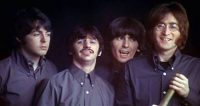
Ringo Starr was The Beatles’ drummer and occasional singer. He was the oldest member and the last to join the band.
Ringo’s a damn good drummer. He was always a good drummer. He’s not technically good, but I think Ringo’s drumming is underrated the same way as Paul’s bass playing is underrated…I think Paul and Ringo stand up anywhere with any of the rock musicians. Not technically great. None of us were technical musicians. None of us could read music. None of us can write it. But as pure musicians, as inspired humans to make noise, they’re as good as anybody!
All We Are Saying, David Sheff
The early years
Ringo was born Richard Starkey on 7 July 1940, at 9 Madryn Street in the Dingle area of Liverpool.
His mother Elsie (née Gleave) had been born on 19 October 1914. She married Richard Starkey Senior, on 24 October 1936, and they separated in September 1943 when the young Ritchie was 3 years old.
Elsie remarried Harry Graves (born 1913) on 17 April 1953. Graves got on well with Richard and encouraged the boy’s passion for music.
A sickly child, Starkey spent long stretches in hospital. Among his afflictions were a coma caused by appendicitis, a cold which led to pleurisy, and various allergies and intolerances to certain foods. His illnesses made him fall behind academically, and he didn’t return to school after a stay in hospital which began at the age of 13.
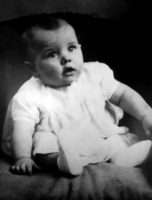
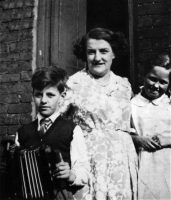
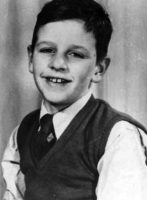
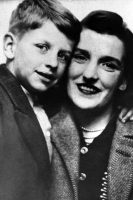
Known as Ritchie as a teenager, Starkey became infatuated with the skiffle craze which swept Liverpool and elsewhere in the 1950s. He co-founded the Eddie Miles Band, which later became Eddie Clayton and the Clayton Squares, and in 1959 joined the Raving Texans – backing band for local singer Rory Storm.
It was while playing in these Liverpool bands that he gained the nickname Ringo Starr – the first part due to the rings he wore, and the second because his solos – which Ringo performed reluctantly – could be billed as ‘Starr Time’.
With The Beatles
Ringo met The Beatles in Hamburg in October 1960. At the time he was performing with Rory Storm and The Hurricanes, but stepped in on a number of occasions when Pete Best was unavailable. At the time there was a sense of solidarity among the British groups in Hamburg, and The Beatles got to know Starr well.
When George Martin demanded that Best be replaced in the summer of 1962, The Beatles insisted that Ringo was the best drummer for them. The decision was controversial among the group’s fans, who demanded “Pete forever! Ringo never!” at the Cavern, and fights broke out.
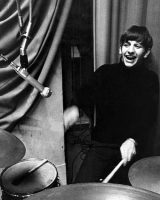
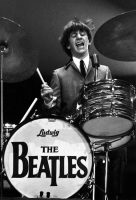
However, Starr didn’t play drums on The Beatles’ first single, Love Me Do. Martin brought session drummer Andy White in for the session, relegating Starr to tambourine on ‘Love Me Do’, and maracas on its b-side ‘PS I Love You’. From then on Ringo played on virtually all The Beatles’ recordings.
Ringo Starr quickly established himself as a rock-steady drummer, whose open hi-hat and four-to-the-floor bass drum helped energise The Beatles’ sound. He was a reliable performer who made only a handful of mistakes during the band’s recording career.
A left-handed drummer who performed on a kit conventionally set up for a right-handed player, Ringo formed a distinctive sound – not least his ‘backwards’ fills which were created by leading with the ‘wrong’ hand. As Ian MacDonald noted, “Starr would, during fills, come off the snare onto the tom-toms with his left hand leading so that he could only progress ‘backwards’ from floor tom to small tom or from small tom to snare.
His droll variations on this, including rolling off the hi-hat, delighted orthodox drummers and added to the newness of The Beatles’ sound.
Revolution In The Head
Examples of his characteristic fills can be found on ‘A Day In The Life’, ‘Hey Jude’, and the ‘Paperback Writer’ b-side ‘Rain’ – which Starr considers to be his best drumming.
‘Ringoisms’ – expressions coined by Starr and adopted by the band – were used by John Lennon for the titles of ‘A Hard Day’s Night’ and ‘Tomorrow Never Knows’. He also contributed the line “Darning his socks in the night” to ‘Eleanor Rigby’.
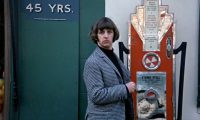
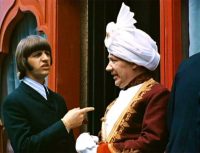
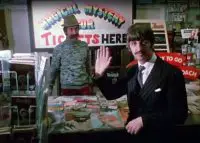
He became the central character in the films Help! and Yellow Submarine – which were a testament to his popularity as a band member. A Hard Day’s Night, too, showed his natural ability as an actor, though he subsequently downplayed his performance, claiming he was hungover while shooting his solo scenes.


Ringo did not play drums on Imagine. Alan White, Jim Gordon and John Bonham shared the drum duties on that album.
Ah yes, of course. That was me being absent-minded – it’s one of my favourite albums, so I should have known.
John Bonham, though? I think you mean Jim Keltner.
John Barham plays harmonium (Jealous Guy) and Vibes (How?)
No Joseph. You’re totally wrong!!! Ringo says he did play drums on Imagine. He said so himself: [expired YouTube link removed]
Ringo must have made a mistake, he did look a bit confused. Alan White was definitely the drummer on Imagine. I’ve seen it on documentary footage.
I agree. I think it was Ben Harper’s mistake though. and Ringo just agreed with him. Ringo probably doesn’t even remember whether he was on the album, bless him.
Hey Larry.
You are the one that is totally wrong!!!
The credit list of musicians was featured on the record sleeve of the Imagine LP when it was released and there is also a credit list for the CD.
Ringo may have been unavailable at that particular time in spring 1971 as he was making a western entitled “Blindman”.
Alan White, Jim Gordon AND Jim Keltner (not John Bonham as I mistakenly listed before)
shared the drumming chores.
He may have mixed that up with Plastic Ono Band, John’s album from tbe previous year, which he did actually do drums for throughout the entire album.
However it became the conventional tale told in Beatles lore that Dear Prudence was drummed by Paul, I’ll never know. The drums on that song are SO Ringo it’s not funny.
after listening to back inthe ussr dear prudence martha my dear and wild honey pie this is some else its not ringo ringo had a unique sound and this drummer assuming paul mc cartney was different
According to the track list. Paul Drummed on Dear Prudence. As well as Back In The USSR (John and George are also listed as playing percussion.
It was drummed by Paul because during the time they were recording those songs, Ringo had temporarily quit after being criticized by Paul on his drumming skills.
Because he did play drums on Dear Prudence. This was the brief time where Ringo left the band on The White Album (The Beatles).
Yeah Dear Prudence is the only Paul drum song that is even close to what Ringo could do. Paul’s an incredibly talented musician, but as a drummer he couldn’t touch Ringo.
My heart is just broken.
Paul wasn’t even the best drummer in the Beatles!
Being 2nd best drummer in the Beatles ain’t half bad though!
There’s a possibility Ringo finished Dear Prudence. https://www.youtube.com/watch?v=Ms3p5gdi-XY
Very interesting all your knowledgable information on Ringo. Enjoying thanks
Nig
Nobody can touch Ringo
To be fair Paul was basically an amateur drummer compared to Ringo who had nearly a decade more experience as a drummer. For Paul’s drumming to be mistaken for Rigo’s as it was at the time is quite the tribute!
I think it’s Mark Lewisohn who lists Paul as the drummer on Dear Prudence, isn’t it? To be honest, Ringo has the greatest drumming style ever, and I love him – but the closing bit of the song is nothing like Ringo’s ever played. (but then, neither is “Rain” or “She Said She Said,” so that’s not much of an argument.)
I think we need to move this discussion on; it also clogs up the Dear Prudence page’s comments section. I won’t publish any more about Ringo/Paul and Dear Prudence on this page, though feel free to talk about anything else to do with Ringo.
John Lennon wrote “Cookin'(In The Kitchen Of Love)” for Ringo’s 1976 album Rotogravure and JL played piano on the track as well.
On Stop And Smell The Roses George Harrison wrote Ringo a song entitled “Wrack My Brain” which was Ringo’s last top 40 hit single.
In the late seventies or early eighties there was an article in Goldmine about Bernard Purdie who claimed to have played drums on early Beatles tracks. Goldmine was a source of info on how and where to obtain golden oldies, as well as interviews with real stars such as Gary U.S. Bonds. Of course I didn’t believe Purdie.
Ringo’s great! Steve Smith, Journey’s much-celebrated drummer, has high praise for him: “Before Ringo, drum stars were measured by their soloing ability and virtuosity. Ringo’s popularity brought forth a new paradigm in how the public saw drummers. We started to see the drummer as an equal participant in the compositional aspect. One of Ringo’s great qualities was that he composed unique, stylistic drum parts for The Beatles songs. His parts are so signature to the songs that you can listen to a Ringo drum part without the rest of the music and still identify the song.”
I’d like to know if Ringo played the drum roll at the beginning of “All you need is love”. It’s very accomplished on the recording and any film I’ve seen of Ringo from the period, shows to my mind, a lack of technique capable of that roll.
You might want to give Geof Emerick’s book a going over. It shows that Paul did some tracks for the Beatles. And even when asked if Ringo was the best drummer in the world, John even noted that “Ringo wasn’t even the best drummer in the Beatles.” Don’t get me wrong, I dig Ringo’s playing and he did bring drums to the forefront along with guys like Gene Krupa and Buddy Rich, but Ringo is not some powerhouse…
Lennon never said “Ringo wasn’t even the best drummer in the Beatles”. It was a joke made by a British comedian (Jasper Carrott) in the 1980s.
Beatles expert Mark Lewisohn debunked this myth a few years ago and found out that John Lennon never said this about Ringo’s drumming it was a British comedian named Jasper Carrot who said this stupid ridiculous nonsense in 1983,*3* years after John died.
https://www.youtube.com/watch?v=jDXaq6c_UWY
Here in this 1971 interview at the Sgt.Regis Hotel John Lennon is asked by the interviewer about him using drummer Jim Keltner and if this was a reflection on Ringo’s drumming.And John said, Oh no I love his drumming. He then said I think Keltner is a bit technically better but Ringo is still one of the best drummers in rock.
https://web.archive.org/web/20080108131358/https://www.geocities.com/wireless_machine/lennon/st_regis.htm
And who did John Lennon use as a drummer on his first brilliant solo album John Lennon Plastic Ono Band when he could have gotten almost anyone who would have jumped at the chance to play on one of John’s albums? Ringo.
And Ringo Starr was already a successful drummer in the most popular successful band in Liverpool,Rorry Storm and The Hurricanes when John,Paul and George asked him to join The Beatles.And George Martin didn’t think that Pete Best was that good,and he and John,Paul and George thought that Ringo was much better.
Also Phil Collins and Max Weinberg are both Ringo fans. And Phil Collins ( who has always been a big Beatles fan and he was in the audience in the concert scene in their great movie A Hard Day’s Night at age 13) says he can’t even duplicate Ringo’s great drumming in A Day In The Life. George Martin says that Ringo always had a great feel and ear for a song and that it was his idea to play the tom toms on A Day In The Life giving it a unique percussion sound.
Mark Lewisohn says in his great book,The Beatles Recording Sessions,that on a handful of occasions during all of the several hundred session tapes and thousand of recording hours can Ringo be heard to have made a mistake or wavered in his beat. He then says that his work was remarkably consistent-and excellent-from 1962 right through to 1970.
Also in a May 1981 phone conversation that Paul McCartney had with Hunter Davies,the author of the only authorized Beatles biography,called appropriately,The Beatles that first came out in 1968,and he updated many times,Paul said that he didn’t have anything against Stuart Sutcliffe, he just couldn’t play bass well at all and Paul has said elsewhere that he had big music ambitions for The Beatles,and in this phone conversation he said it was the same with Pete Best,that it was all junk that they replaced him with Ringo because they were jealous of him being more popular,Paul said Ringo was so much better.
the only other drummers used where andy white(love me do – ps i loveyou- and please please me) and jimmy nichol on the austrailian tour paul mc cartney also did some drumming on tracks ( back in the ussr) and a couple more lesser known songs
“Lesser known?”
Andy White did not play on the originally released version of “Please Please Me”.
The version he recorded on Sept. 11, 1962 was released on the Anthology, and the difference is blantantly obvious. Just to be clear…..
ringo starr recorded backin the Ussr, but what people dont realize is that Paul realized it needed more effects so paul recorded it on him playing the drums. when ringo heard the song ringo he was very upset and stated that not me and quit the band for a short time and came back. Paul played on Dear Prudence, Martha my dear,Wild Honey Pie–
The real reason Ringo quit was because he felt he wasn’t playing well and not feeling close towards the other three. It’s been mentioned by Ringo himself in past interviews and The Beatles Anthology.
Beatles love me do documentry 1962- GEORGE MARTIN wasnt happy with either pete best or ringos drumming so he brought in session drummer andy white who recorded all 3 love me do-please please me-ps i love you. Ringos version of love me do released in 62-63??? went to #17 on the british charts- george martin not being to happy about ringos version released andys white version in 1964 it went to #1 world wide, george martin preferred all 3 of andys version please please me was andy version as well.
Andy’s version of Please Please Me is on Anthology 1. The one on the single and the “Please Please Me” album has Ringo on drums.
Andy White’s version was only number one in the US with the help of Imports from Canada with Ringo on the drums. It was never no.1 worldwide.
The released version of “Please Please Me” – single and album – was recorded Nov. 26, 1962 with RINGO on drums.
The “take one” version, recorded on Sept. 11, 1962, had Andy White on drums. This was not released until 1995 on Anthology 1.
Can we stop flubbing-up this easily verifiable bit of information?
What a mop top!!!
Ringo was a merseybeat drummer and was one of a number of merseyside drummers that had a new attitude and passion for musical drumset playing.The great merseybeat drummers were the roots and reason that the 500 Innovative groups on merseyside, up to 1965, were considered unique in GB and why so many had great success in Europe, USA afterwards.Merseybeat drummers composed drum solutions to suit the other players in the band to optimize the group sound.Some were better at this than others ie. Ringo replacing Pete Best .Pete played better with other merseyside bands that suited his groove.Merseybeat drummers were expected swing in any music genre as the groups at that time played anything from jazz, to songs from broadway musicals,rock&roll, r&b and skiffle.We didn’t have the Cliff Richard and the Shadows format and often had sax players in our bands like Boots who played in the Undertakers with Jackie Lomax.
Ringo is the most influential drummer there has ever been. Period. The guy was actually already hip when the Beatles snagged him early on… He is also the keeper of the Classic Rock flame with his All-Starr Band. The guy always pays forward to his friends…He is the definition of a rock star! Only Ginger Baker and Keith Moon approach him. John Bonham came later…
Exactly
Just listen to Ringo’s drumming on Rain, Tomorrow Never Knows, I Feel Fine, Then listen to his raw steady sound on John Lennon/Plastic Ono Band. This guy is just awesome. He is the best drummer in the best Band. Period.
Joe, just reminding you that Ringo was inducted into the Rock and Roll Hall of Fame in April, 2015.
I’m surprised no one mentions Ringo’s drumming performance on Come together: this is only when I paid attention to his play on this track that I realised how good a drummer he really is… All with finesse… A bit like Nick Mason for the Floyd. At this stage, the Beatles were influenced by the progressive rock movement (I want you could be a progrock track, in my view). Love this website!
Ringo and his all starr band are playing in my town tonight, just down the road. My last chance to see a Beatle and I can’t go…wah!
Ringo’s drumming was ALWAYS fantastic. But from 1967 to 1970, he was the BEST there will ever be. Don’t believe me? Listen closely to most (all) of Sgt Pepper right up to Abbey Road. It’s like he stepped up his game by many notches.
His drumming on Abbey Road alone (and not even that drum solo which is great) on songs like Come Together, I Want you, The Medley, Octo Garden (all of them really) should make ANY drummer rethink how they should REALLY play to enhance a song. He’s the baddest rock drummer that ever was. And don’t give me that Bonham, Peart (all exceptional of course) etc etc crap…those guys wish they could ‘play to the tune’ as well as Ringo.
Ringo was so much more than a brilliant musician. He was dealing with three other geniuses all with temperments and personalities and yet when they split who of them consistently played on the others recordings? It was Ringo. His ability to get along with the others even after the split and his musical talent is his legacy. Governments could learn diplomacy from him.
i worked with ringos dad – harry graves for several years and regarded him as a good friend, this was in the 60s. in 1962 he went to lime st station to collect a drum kit-little did we know the impact that would bring.
If you watch the Maysles Brothers “The First U.S. Visit” DVD you’ll notice that Ringo was the coolest, funniest and most calm of the four. George was ill,Paul charming and John a nervous wreck. It was Ringo who sparked that great chemistry that showed the U.S. these guys weren’t some deadbeats from England. I’d say because of Ringo the Beatles wouldn’t have had the great response they received. Can you imagine any other drummer filling that spot with THAT cool personality?
I think that is precisely the exact point!
John was a “nervous wreck”? What film were you watching? John was his usual quick-witted, slightly sarcastic self throughout, especially during the press-conference at JFK just after arrival.
It was in the Anthology that George said that they really didn’t become The Beatles until after Ringo joined the band. Nuff said.
Hello, all! I agree with my fellow Jeffrey, Geoffrey. Ringo’s merseyside “beat” playing made him versatile. He played jazz, as well as rock. That’s important. There’s a sense with Ringo that if they wanted to play more jazz he could do that. Country, blues, whatever, one feels that Ringo was in the groove. Yes, the drumming as music goes far beyond rock… to Varèse, to Stravinsky, to most modern classical music. Ringo is the heart and soul of the Beatles… he’s the “beat” and the heartbeat. I understand that fans of this site feel that the Beatles’ other members deserve more credit as songwriters and that is reasonable, though a bit silly. Take the drumming away and very little remains. I’m serious. Remove the drums. Just make it a trio… in fact, you can’t do it! Remove it all EXCEPT the drums? You can do it! Ringo lives!
It seems to me that all of Ringo’s best drumming moments in the Beatles are on John songs, and sometimes George songs (Long, Long, Long, for example). And of all the many Paul songs, I was having trouble finding ones where Ringo shines, outside of Hey Jude or You Won’t See Me. Am I off-track? Are there Paul songs where Ringo is front and center?
Exactly
You talk about Ringo “shining on George’s songs” and pick “Long, long, long” as an example?
The drumming on “Here comes the sun” is just amazing, and there’s of course the thick intro to “Something”, and these HEAVY cymbals…
Paul songs where Ringo shines:
“Get back” immediately comes to mind, “Helter Skelter”, obviously, “When I’m 64”, “Hey Jude” with that legendary intro-fill, “Drive my car” – I will NEVER understand what Ringo does on that intro!, oh, and maybe “The end”, anybody??????
Duh!
But nice try to make it look like Paul actively tried to keep Ringo from “shining” on the drums…
Some “fans” I just can’t understand.
Ringo was also called “Ringo” because he loved Westerns…John Wayne’s character in “Stagecoach” was named “Ringo”…Lorne Greene of the TV series “Bonanza” recorded a spoken-word Western ballad that became a #1 record – It was called “Ringo”…
Ringo once said (in response to a movement to “stamp out the Beatles”) that they were starting a movement to stamp out Detroit. Being from there, I wish they would have.
My favorite Beatle ever! Doesn’t mean discredited the other, but it won’t same without him.
Do you have pictures of Ringo Starr in LA with the APPLE Office door being usedd for some sort of promotion?